I recently came across a Gen Z post on X expressing genuine amazement at a strange feature of the Baby Boomer workplace: people went home at the end of the day.
And that was pretty much it.
There was no email waiting for them. No Slack. No Teams. No text from the boss. No Zoom meeting with Singapore at 9:30 at night. No smartphone vibrating on the nightstand because somebody in Accounting had hit “Reply All.”
You left the office and, barring an actual emergency, work stayed at the office.
The young poster’s question was essentially: How did these people ever get anything done?
It’s a fair question for someone who has spent an entire working life in a world where being reachable every waking moment is considered normal.
So let’s look at what people managed to accomplish anyway.
They put men on the Moon
In 1969, the United States sent three men roughly 240,000 miles from Earth, landed two of them on the Moon, and brought all three home alive.
NASA coordinated hundreds of thousands of people working for government agencies, universities and private contractors scattered across the country.
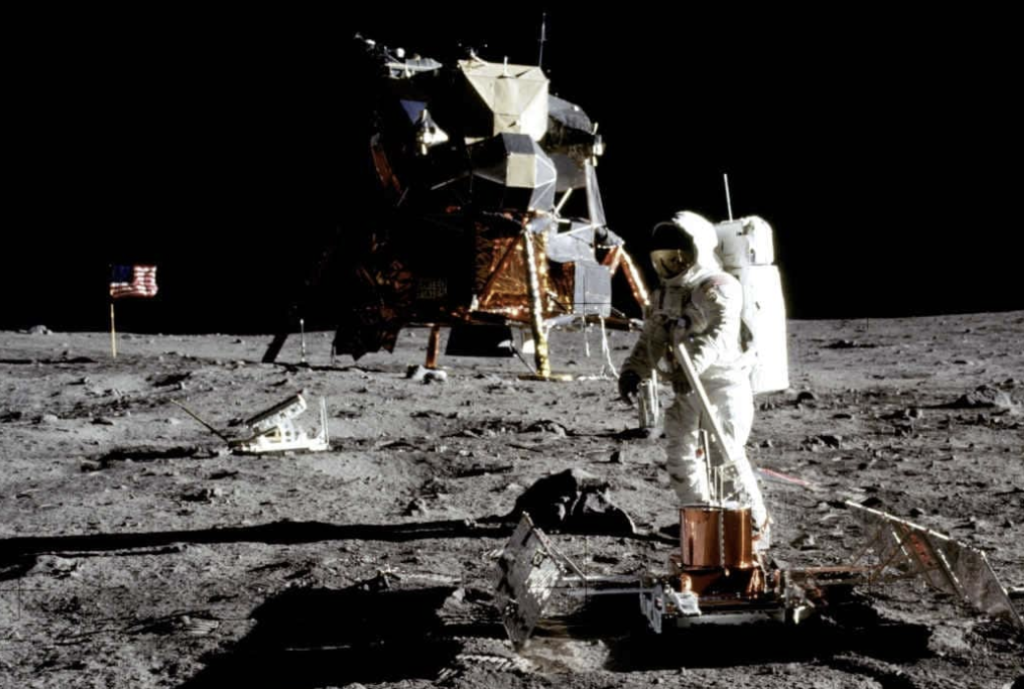
There were no emails.
There were computers, of course, but nothing remotely resembling today’s communications infrastructure. Engineers worked from paper drawings. Information moved by telephone, teletype, courier and mail. Meetings required people to be in the same room.
Somehow, they found the Moon.
And, more impressively, found their way back.
Strictly speaking, Apollo wasn’t a Baby Boomer accomplishment. Neil Armstrong, Buzz Aldrin and Michael Collins were all born in 1930, and most of NASA’s senior leadership came from the generations preceding the Boomers.
But that only makes the larger point stronger.
Human beings apparently possessed organizational skills before Gmail.
They stopped smallpox
Smallpox killed hundreds of millions of people over the centuries.
Then governments, doctors and public-health workers around the world mounted an extraordinary international vaccination and surveillance campaign.
They had to locate outbreaks in remote areas, transport vaccines, maintain records, coordinate governments and health agencies, and track down people who had come into contact with infected patients.
In 1980, the World Health Organization declared smallpox eradicated.
Not reduced.
Not controlled.
Eradicated.
Humanity deliberately eliminated a human infectious disease from the planet.
There wasn’t a single shared Google Doc involved.
They built a system to keep nuclear weapons from spreading everywhere
During the early nuclear age, policymakers worried that eventually dozens of countries might acquire atomic bombs.
Instead, countries negotiated the Nuclear Non-Proliferation Treaty, opened for signature in 1968 and in force since 1970.
Nearly the entire world eventually joined.
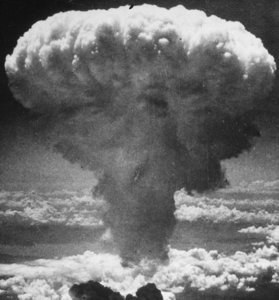
Then came an alphabet soup of nuclear diplomacy: SALT, START, ABM and INF.
The 1987 Intermediate-Range Nuclear Forces Treaty went beyond merely limiting weapons. The United States and Soviet Union agreed to eliminate an entire class of nuclear-capable missiles and created an unprecedented verification system to make sure each side actually did it.
Think about the communications problem.
American diplomats had to communicate with Washington. Soviet diplomats had to communicate with Moscow. Governments had to consult allies scattered across continents. Lawyers had to negotiate precise language. Military officers and scientists had to work out technical details. Translators had to make sure that what one side thought it had agreed to was what the other side thought it had agreed to.
And a misunderstanding could conceivably have involved nuclear war.
They did it with meetings, diplomatic cables, telephones, couriers, paper documents and a technology younger readers may wish to Google called the fax machine.
They ended the Cold War without blowing up the world
For roughly four decades, the United States and Soviet Union confronted one another with nuclear arsenals capable of destroying civilization.
Then, between 1989 and 1991, the Cold War ended.
The Berlin Wall fell. Eastern Europe’s communist governments collapsed. Germany reunified. The Warsaw Pact disappeared. Eventually the Soviet Union itself ceased to exist.
There were plenty of wars during the Cold War, but the United States and Soviet Union never fought one another directly.
The peaceful conclusion of that confrontation required diplomacy among adversaries, constant consultation among allies, arms-control negotiations, summit meetings and coordination among governments across the world.
By this point Baby Boomers were very much part of the diplomatic, military, business and government machinery, although most of the famous leaders at the top—Ronald Reagan, George H.W. Bush, Mikhail Gorbachev, George Shultz and James Baker among them—belonged to earlier generations.
Apparently nobody needed to CC the entire State Department.
They got the world to cooperate to save the ozone layer
Scientists discovered that chlorofluorocarbons and other chemicals were damaging the Earth’s protective ozone layer.
This was the sort of problem that ought to have been nearly impossible to solve.
It crossed national borders. The chemicals were economically useful. Different countries had different interests. No government could solve the problem by itself.
Nevertheless, countries negotiated the 1987 Montreal Protocol, establishing an international system for phasing out ozone-depleting substances.
It became one of the great success stories of international environmental cooperation.
Again: no email. No cloud collaboration. No video conferences. No group chat.
Just people somehow communicating with one another.
They built the iconic 1964 1/2 Ford Mustang
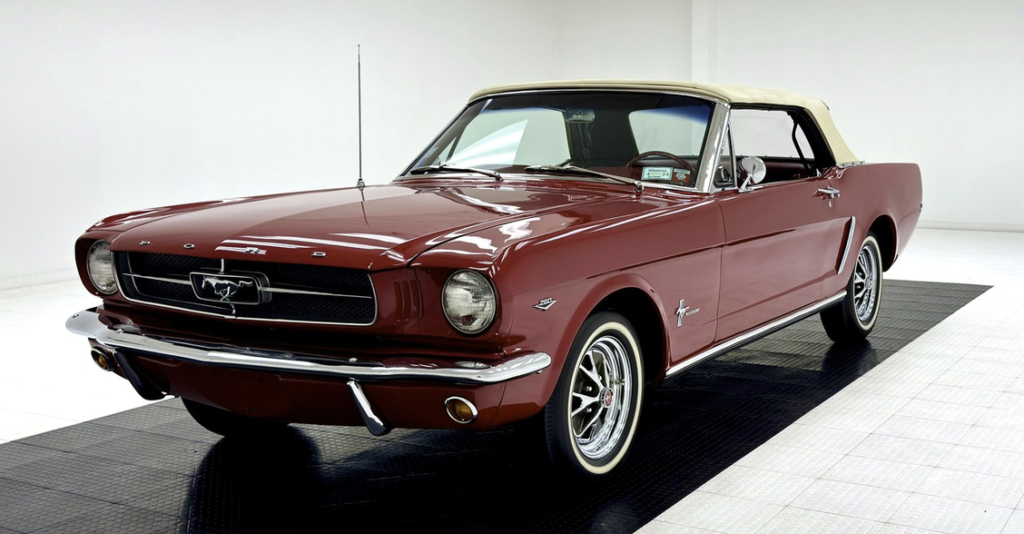
The 1964½ Ford Mustang was not a mid-year leftover. It was a new kind of American car, unveiled to the press on April 14, 1964, and to the public on April 17 at the Ford Pavilion of the New York World’s Fair.
Collectors still call those first months “1964½” even though Ford titled them as 1965s.
Sixty-plus years on, that first shape is still the one people mean when they say Mustang: chrome bumper, running horse in the grille, and the look of a generation that had just been handed its own car.
Ford bought time on all three TV networks the same night, put convertibles on Walt Disney’s Magic Skyway ride, and watched dealerships flood: more than four million people came through in the first weekend, and about 22,000 orders were written on day one.
Ford had hoped for maybe 100,000 to 150,000 in the first year. It sold more than 400,000 in twelve months and invented the “pony car” class while it was at it.
So how did they do it?
The answer isn’t that complicated.
They talked to each other.
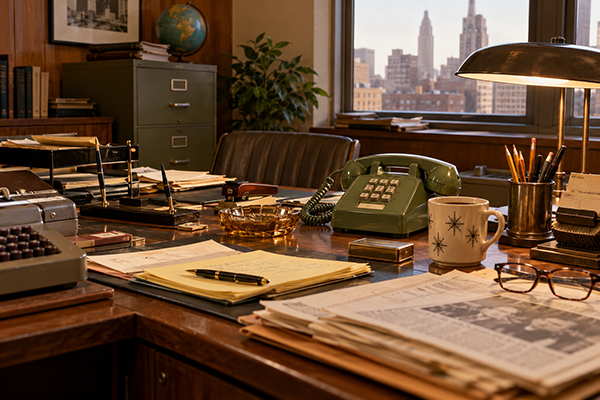
They used telephones. They dictated letters. Secretaries typed correspondence. Governments used cables and telexes. Documents went by courier. People scheduled meetings, sat around tables and made decisions. If something couldn’t be resolved immediately, somebody went away, thought about it, and came back the next day.
Most importantly, perhaps, communication and work weren’t considered the same thing.
Today we can communicate instantaneously with virtually anybody on Earth. A document can be sent to 50 people in one second. Twenty people on four continents can meet by video with five minutes’ notice.
That’s an extraordinary achievement.
But somewhere along the way we seem to have quietly adopted the assumption that because communication can be instantaneous, it must be instantaneous.
And because an employee can be reached at 9:47 p.m., there must be some productivity advantage in reaching him at 9:47 p.m.
The pre-email world offers an interesting challenge to that assumption.
These people negotiated nuclear treaties, eradicated smallpox, coordinated global alliances, saved the ozone layer and sent human beings to another world.
Then, at five o’clock, many of them put on their coats, walked out the door and went home.
Maybe the remarkable question isn’t how they managed to get so much done without email.
Maybe it’s how we got email and somehow ended up with less time.